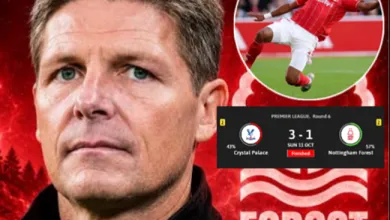
OLIVER GLASNER ‘MUST DO ONE THING’ TO KEEP HIS JOB AT NOTTINGHAM FOREST AFTER HUMILIATING DEFEAT TO CRYSTAL PALACE AGAIN

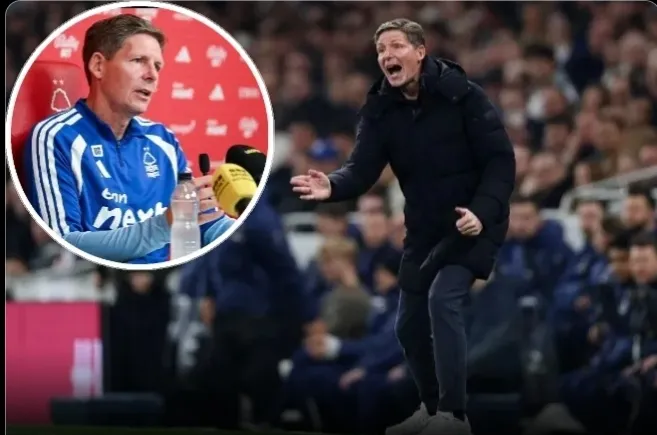
Oliver Glasner could face growing pressure over his future at Nottingham Forest following another humiliating defeat against Crystal Palace, with questions emerging over what the manager must do to convince the club’s hierarchy that he remains the right person to lead the team forward.
The result has reportedly intensified concerns surrounding Forest’s performances, with supporters demanding answers after another disappointing encounter against Palace. The defeat has also raised questions about the team’s defensive organisation, tactical approach and ability to respond when confronted with difficult opposition.
For a club with ambitions of establishing itself as a consistent force in English football, repeated setbacks against familiar opponents can quickly become a source of frustration. Forest need stability, confidence and a clear direction, and the manager will inevitably come under scrutiny if results continue to fall below expectations.
Although one defeat does not necessarily determine a manager’s future, the circumstances surrounding repeated losses can influence how a club evaluates its coaching staff. Glasner’s ability to respond to the latest disappointment could therefore prove crucial in determining the direction of the team.
GLASNER FACES QUESTIONS AFTER ANOTHER DISAPPOINTING RESULT
Football management is an unforgiving profession, particularly in the Premier League, where expectations are high and patience can disappear quickly when results turn against a team.
For Glasner, the challenge is not simply about recovering from a single disappointing performance. It is about demonstrating that he has a clear plan for improving Nottingham Forest and addressing the weaknesses that have contributed to their difficulties.

Repeated defeats can expose problems that might otherwise remain hidden during successful periods. Defensive lapses, poor decision-making, ineffective pressing and a lack of creativity in the final third can all become more noticeable when a team struggles to produce positive results.
Forest will need to examine these areas carefully if they are to prevent further disappointments.
The manager’s tactical decisions will also attract attention. Supporters will want to understand whether his preferred formation suits the players available to him and whether adjustments are necessary against opponents who have repeatedly caused problems.
However, tactical criticism must be balanced with an understanding that football matches are influenced by several factors, including individual mistakes, injuries, squad depth and the quality of the opposition.
The important question is whether Glasner can identify the problems and deliver convincing improvements.
THE ONE THING GLASNER MUST DO TO KEEP HIS JOB
If Glasner wants to strengthen his position and ease concerns about his future, the most important thing he must do is deliver an immediate and sustained improvement in results and performances.
Managers are rarely judged solely by their explanations after a defeat. Ultimately, their credibility depends on what happens on the pitch.
A convincing response in the next few matches would help demonstrate that Forest can recover from adversity rather than allow one disappointing result to trigger a prolonged period of poor form.
That response must involve more than simply collecting points. The team needs to show greater defensive discipline, improved movement without the ball and a more effective attacking structure.
If Forest continue conceding avoidable goals or struggle to create clear opportunities, questions about the manager’s methods are likely to persist.
Glasner must also demonstrate that he is willing to make difficult decisions when necessary. This could mean adjusting his formation, changing personnel or introducing a different tactical approach when the existing system fails to produce the desired results.
Such changes would not automatically guarantee success, but they could show that the manager recognises the seriousness of the situation and is prepared to respond.
The club’s hierarchy will ultimately want evidence that the coaching staff can identify weaknesses, develop solutions and restore consistency.
TACTICAL CHANGES COULD BE NECESSARY
One area that deserves attention is Forest’s defensive organisation.
Against technically capable opponents, defensive coordination can make the difference between a competitive performance and a damaging defeat. Players must understand when to press, when to retreat and how to maintain their shape when possession is lost.
If Forest have struggled in these areas, Glasner may need to reconsider how aggressively his team presses and whether the defensive line is positioned appropriately for the players available.
A high defensive line can help a team maintain pressure and recover possession quickly, but it can also leave dangerous spaces behind the defence when opponents break through the press.
 Similarly, an overly cautious approach can allow opposition players too much time and space to build attacks.
Finding the right balance will be essential.
Forest must also improve their transitions between defence and attack. Winning possession is only the first step; the team must then move the ball quickly and intelligently enough to exploit opportunities before the opposition reorganises.
Without effective transitions, even a team that defends reasonably well can struggle to create meaningful attacking opportunities.
Glasner’s challenge will be to find a tactical structure that maximises the strengths of his available players while reducing the weaknesses that opponents can exploit.
SUPPORTERS WILL EXPECT A RESPONSE
Defeats are part of football, but the manner in which a team responds often determines how supporters judge its character and ambition.
Forest fans will understandably want to see greater determination, improved concentration and a more convincing performance from their players.
When a team suffers repeated disappointment against the same opponent, frustration can increase because supporters begin to question whether the coaching staff have found an effective way to address the problem.
However, the response must come from the entire squad rather than the manager alone.
Players must take responsibility for their performances, particularly when individual errors contribute to damaging results. Concentration, communication and decision-making are essential qualities that cannot be supplied entirely by tactical instructions.
Senior players also have an important role to play in helping the team remain composed during difficult periods.
Glasner, meanwhile, must ensure that frustration does not undermine the squad’s confidence. Public criticism, internal disagreements and uncertainty about selection can create additional difficulties if they are not managed carefully.
A united response would give Forest a better chance of rebuilding momentum.
COULD NOTTINGHAM FOREST CONSIDER A CHANGE?
Whenever a manager comes under pressure, speculation about a possible departure is rarely far behind.
Nevertheless, it would be premature to conclude that Glasner’s position is in immediate danger without reliable information confirming the club’s intentions.
Football clubs generally consider several factors before making a managerial decision. These can include recent results, performances, progress towards season objectives, relationships within the squad and the availability of suitable replacements.
The financial implications of a managerial change may also influence the decision.
Replacing a manager does not automatically solve a team’s problems. A new appointment may bring fresh ideas and renewed energy, but it can also require time for players to adapt to different tactics and expectations.
For that reason, Nottingham Forest’s decision-makers would need to determine whether the current difficulties are temporary or evidence of deeper problems that require a different approach.
If Glasner can produce an encouraging response, he may strengthen the argument for allowing his project to continue.
Conversely, continued poor performances could make it increasingly difficult for the club to justify maintaining the existing arrangement.
THE NEXT FEW MATCHES COULD BE IMPORTANT
The coming fixtures could provide a clearer indication of whether Forest are capable of recovering from their disappointment.
Glasner will need his players to approach those matches with greater urgency, discipline and belief. Even small improvements in concentration and decision-making can have a significant effect on results, particularly in closely contested games.
The manager must also ensure that his tactical instructions are clear and that every player understands their responsibilities.
Forest cannot afford to approach the next challenge as though the previous defeat has no wider implications. Instead, the team must use the disappointment as motivation to improve.
A strong performance would help restore confidence among supporters and potentially reduce the pressure surrounding the manager.